- Home
- >
- News
- >
- Company news
- >
- Common MIM Defects and How Powder Properties Affect MIM Performance
Common MIM Defects and How Powder Properties Affect MIM Performance
🔍 Common MIM Defects and Their Root Causes
1. Cracking During Debinding
Cracking is one of the most frequent defects in MIM.
Possible causes:
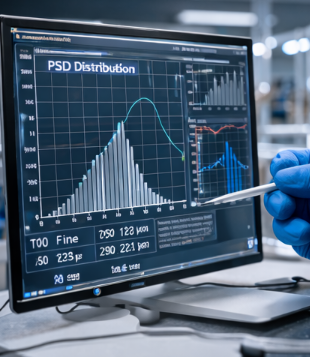
Non-uniform particle size distribution (PSD)
Poor powder packing density
Excessive fine particles
These factors affect binder removal behavior and create internal stress.
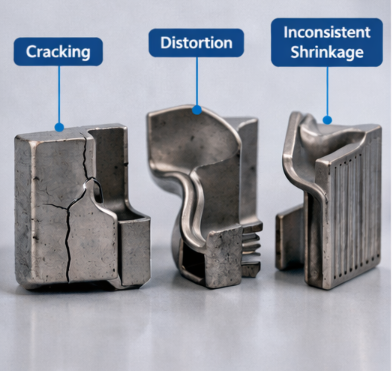
2. Distortion After Sintering
Dimensional instability is often linked to:
Irregular powder morphology
Inconsistent shrinkage behavior
Oxygen variation in powder batches
Even small powder variations can lead to large deviations in mass production.
3. Poor Surface Finish
Surface defects may result from:
Satellite particles in atomized powder
Irregular particle shape
Binder-powder segregation
4. Mechanical Property Variability
Inconsistent strength or density is often caused by:
Oxygen and carbon fluctuations
Batch-to-batch PSD inconsistency
Powder production instability
⚙️ Why Powder Matters More Than Process
While process parameters are adjustable, they operate within limits defined by the material system.
If the powder is not optimized for the application:
process windows become narrow
stability becomes difficult to achieve
yield loss increases
This is why many “process problems” are actually material system problems.
🏭 Our Approach to Stable MIM Feedstock
At LIDE, we focus on:
Controlled particle size distribution (PSD design)
Low oxygen atomization processes
High batch-to-batch consistency
Feedstock systems optimized for industrial production
📩 Conclusion
Understanding the relationship between powder characteristics and MIM defects is essential for improving production stability.
If you are facing cracking, shrinkage, or consistency issues in MIM, it may be worth reviewing the material system, not just the process.
👉 Contact us for technical discussion or sample evaluation.
Related articles: