- Home
- >
- News
- >
- Company news
- >
- The Cross-Industry Journey of ASTM F75
The Cross-Industry Journey of ASTM F75
Author: Jett Li
Over the past decades, ASTM F75 (cobalt–chromium–molybdenum alloy) has held a vital position in the field of medical implants due to its outstanding mechanical properties and biocompatibility. It has been widely used in artificial joints, dental restorations, and other highly wear-resistant medical components. However, with the rapid advancement of next-generation information technologies and high-end manufacturing—particularly the growing demand for high-performance materials in industries such as smartphones and electric vehicles—ASTM F75 has gradually expanded beyond its traditional “medical-only” role and emerged as a promising functional material in consumer electronics. Its application in the lens base support structure of Apple 4G smartphones serves as strong evidence of this cross-industry expansion.
Cross-Industry Rise and Application Breakthrough of ASTM F75
In 2016, Apple began exploring the use of ASTM F75 in structural components for its 4G smartphones, marking the material’s official entry into the consumer electronics manufacturing sector. As a cobalt-based alloy composed primarily of cobalt, chromium, and molybdenum, ASTM F75 offers excellent corrosion resistance, wear resistance, and high strength. Traditionally used in human implants such as hip and knee prostheses and bone repair materials, its unique combination of properties also makes it well suited to meet the stringent requirements of miniaturization, high strength, and reliability in consumer electronic structures.
By 2020, leveraging its high strength, high hardness, high magnetic permeability, and nickel-free composition, ASTM F75 became a key development material in the Metal Injection Molding (MIM) process and was successfully applied to the lens base support structure of Apple smartphones. This application not only validated the feasibility and stability of ASTM F75 in high-end consumer electronics but also laid the groundwork for broader multi-industry expansion. Notably, even amid the global COVID-19 pandemic, the MIM industry maintained steady growth, with ASTM F75 playing a positive role in driving this momentum.
LIDE’s Technical Contributions to ASTM F75 Powder Development
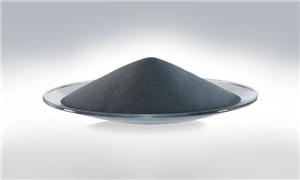
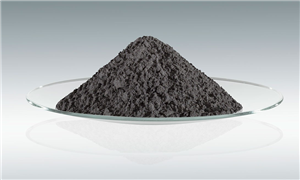
As one of the earliest domestic enterprises engaged in the R&D and production of high-pressure water–gas combined atomized metal powders, LIDE has played a pivotal role in the industrialization of ASTM F75 alloy powder. Building upon years of expertise in atomization technology, we successfully overcame multiple technical bottlenecks in the preparation of ASTM F75 powder.
During the early development phase, the team faced numerous challenges. To obtain accurate and reliable process parameters, a dedicated F75 powder R&D group was established to conduct systematic experimentation. Due to stringent powder morphology requirements, pure water atomization alone was insufficient to meet particle shape control standards. Ultimately, the team adopted a water–gas combined atomization process better suited for high-performance alloy powders. This process improved fragmentation efficiency and reduced localized oxygen partial pressure, enabling the production of fine and uniform particles while significantly lowering oxygen content and suppressing silicon inclusions.
Through continuous optimization, LIDE achieved stable, high-quality production of ASTM F75 powder. The sintered products exhibit high density and low deformation, meeting the dual requirements of dimensional accuracy and mechanical performance for precision components. Market data show that LIDE produced 180 tons of ASTM F75 powder in 2019, increased output to 490 tons in 2020, and maintained 200 tons in 2021, making it one of the leading global producers in terms of market share. Customers consistently report stable performance and high batch consistency, providing reliable raw material support for downstream precision components.
Building upon the success of water–gas combined atomization, LIDE further developed gas-atomized F75 powder (0–22 μm) for more advanced application scenarios. By optimizing nozzle structure, pressure matching, and airflow control, we significantly improved powder sphericity, achieving over 90% spherical particles. Oxygen content is controlled within 300–800 ppm, substantially enhancing suitability for medical implants and high-performance MIM components, while also supporting demanding aerospace applications.
Market Changes and the Coordinated Evolution of Material Systems
In recent years, the rapid growth of electric vehicles and consumer electronics battery industries has driven strong demand for cobalt resources, leading to sustained increases in cobalt prices and significantly higher costs for cobalt-based alloys. Under such circumstances, some applications that previously adopted ASTM F75 have gradually shifted toward more cost-effective alternatives, such as aluminum alloys. For example, in smartphone lens base structures, manufacturers including Apple have adopted aluminum alloy solutions in certain models for cost considerations.
However, in fields requiring stringent performance, reliability, and safety standards—such as medical implants and aerospace—ASTM F75 remains irreplaceable and continues to serve as the material of choice for critical components and high-end implants.
Looking Ahead: Continuous Innovation in High-Performance Applications
Despite fluctuations in consumer electronics demand affecting the application structure of ASTM F75, LIDE remains committed to technology-driven development and continuous expansion of its applications in high-end sectors such as medical and aerospace. We have successfully developed multiple specifications of F75 powders suitable for medical implant standards, including low-silicon, low-oxygen 0–22 μm water–gas combined atomized powders and gas-atomized powders. These products meet the stringent requirements for purity and performance stability in implants, surgical instruments, and aerospace critical components.
In the aerospace sector, ASTM F75 demonstrates strong application potential due to its excellent high-temperature mechanical properties and corrosion resistance, making it suitable for structural and functional components operating under extreme conditions.
Conclusion
From medical implants to consumer electronics and aerospace, the diversified applications of ASTM F75 continue to expand its value boundaries. As a leading domestic alloy powder manufacturer, LIDE will continue investing in the development and optimization of ASTM F75 series products, driving material innovation through technological advancement to meet evolving market demands.
Looking ahead, whether in healthcare, aerospace, next-generation electronics, or new energy vehicles, ASTM F75 is poised to continue leveraging its unique advantages to support material innovation and system upgrades in high-end manufacturing.
© 2026 Jett Li. All rights reserved.
Unauthorized reproduction, distribution, or modification of this article is prohibited.